Thursday, February 21, 2019


Tempers flare at public meeting on pot firm's pong

Tensions boiled over Friday at a public meeting for residents and businesses concerned about an odour coming from a medical marijuana grower operating in a former factory in northwest London.
Dale Carruthers Updated: February 15, 2019
Members of the Hyde Park Business Improvement Association listen to Ward 7 Coun. Josh Morgan, right, during a meeting to address the stench emanating from a marijuana growing business at 1490 North Routledge Park in London on Friday. On the panel with Morgan were Donna Szpakowski, general manager of the Hyde Park BIA (middle), and London West MP Kate Young. (Derek Ruttan/The London Free Press)
Tensions boiled over Friday at a public meeting for residents and businesses concerned about an odour coming from a medical marijuana grower operating in a former factory in northwest London.
The Hyde Park Business Improvement Association organized the meeting, attended by Ward 7 Coun. Josh Morgan and MP Kate Young (Lib.-London West) in response to a flood of complaints that first began in the fall.
Nearly two dozen business owners and area residents filled a basement room at the Four Seasons restaurant on Fanshawe Park Road to demand politicians take immediate action against the pot-growing business.
But when neither Young nor Morgan could provide concrete steps to staunch the stink, or provide a timeline for fixing the problem, discussion grew heated.
“You come here unprepared, without any answers at all — none. It’s buck passing,” said area resident Tim Stephen.
Developer Harry Hermann also wasn’t satisfied with the lack of answers, warning the odour has both economic and health costs to area residents and businesses.
“This is ridiculous. We’re getting danced around here,” he said of the Young’s responses to the crowd’s questions.
The Hyde Park Business Improvement Association is not pleased with the stench emanating from a marijuana growing business at 1490 North Routledge Park in London. (Derek Ruttan/The London Free Press)
Hermann, owner of HLH Investments, demanded an inspector be sent to ensure the North Routledge Park operation complies with Health Canada ventilation requirements.
The federal agency, which regulates production of medical marijuana, requires growers to install air filtration systems to contain odours.
“It’s very obvious it’s raw ventilation coming from the building,” Hermann said, adding the smell that gets worse in warm weather. “It’s sickening.”
A man who previously identified himself as the operator of the marijuana business told The Free Press that he grows for medicinal users and complies fully with Health Canada requirements. The man, who declined to give his name, didn’t disclose how many plants are being cultivated inside the former Spencer Steel building.
But city staff estimate it holds as many as 1,800 cannabis plants, Morgan said, noting the owner has a valid permit to grow medical marijuana.
Under Canada’s marijuana law, adults with pot prescriptions may grow their own cannabis or appoint an individual approved by Health Canada to do it for them. These growers are separate from the country’s nearly 150 commercial licensed producers, large-scale growers who supply most of Canada’s medical marijuana and all its recreational pot.
Young said she has raised the issue with an MP from Niagara, where there’s a similar problem, and with Health Minister Ginette Petitpas Taylor, but stopped short of acceding to the crowd’s demand to bring their concerns directly to Prime Minister Justin Trudeau.
“I know some of you have written complaint letters, and I really encourage you to do that,” Young said, prompting a backlash from the audience.
Allan Tipping, who led the fight against OrgaWorld, a south London compost giant slapped with a massive 2017 fine for foul odours, urged those in attendance to keep complaining.
“Unfortunately, you have to complain, people. You have to keep going at it,” he said.

Move it odour! How to prevent moisture in pharmaceutical packaging

While moisture in pharmaceutical packaging can have negative or even dangerous effects on its content, unpleasant odours are especially repellent to patients. Here, Ursula Hahn, head of product management, Sanner, Germany, looks at how both can be systematically prevented using suitable adsorbents – provided the right aspects are taken into account.


Many pharmaceutical products are sensitive to moisture, the effects of which are manifold and often pose a high risk to both drugs and patients. In the case of tablets, powders and effervescent tablets, the properties and texture may change, whereas gel capsules might dissolve, and blood or urine test strips may produce false or misleading results. In the worst case, the efficacy of drugs is reduced, or the analytical results are falsified, which can lead to an incorrect medication and impede successful therapy. In addition, many pharmaceuticals, especially analgesics such as acetylsalicylic acid, release specific molecules into the ambient air inside the packaging that can develop very unpleasant odours.

Only real data provides reliable results

The amount of humidity that penetrates the packaging is decisive for the stability of a moisture-sensitive drug. Around 65% of humidity ingress can be attributed to the packaging. Weak spots can be the packaging wall, the sealing surfaces between containers and closures, as well as the sealing seams of blister packs. Hence the choice of the primary packaging depends mainly on maintaining the optimum climate inside the packaging to ensure the required shelf life.

A holistic approach that considers all aspects of moisture ingress into a pharmaceutical packaging is indispensable. Relevant parameters such as material type, wall thickness, product moisture and production conditions, as well as differing climatic conditions and consumer behaviour must be observed when designing the packaging. To obtain reliable data, tests should always be conducted with the actual packaging. Material datasheets or databases provide data determined under very specific and ideal conditions. These cannot be transferred 1:1 to a specific packaging. Consequently, only real data and realistic analyses avoid unnecessary durability tests.

Desiccants: silica gel or molecular sieves

Depending on the area of application, different desiccants such as silica gel or molecular sieves can be used. Hygroscopic desiccants attract moisture and keep it away from the content. The most common desiccant, silica gel, contains small interconnected channels that open into pores on the surface and can absorb up to 36% of their own weight without altering their structure. The higher the relative ambient humidity, the higher the adsorption capacity.

Molecular sieves, on the other hand, are synthetically produced zeolites with a uniform pore diameter and a crystalline structure. Molecular sieves adsorb moisture corresponding to between 20- 22% of their own weight, almost independently of the relative ambient humidity. While silica gel brings moisture to a certain level, molecular sieves can achieve a climate of close to 0% relative humidity inside a closed packaging.

Activated carbon: far more than odour adsorption

When it comes to odour adsorption, activated carbon is particularly efficient: the surface of just one kilogram of activated carbon equals a 160-kilometre two-line highway. Activated carbon is made of organic material with high carbon content such as peat, wood or coconut shell. This material is slowly heated in an oxygen-depleted or oxygen-free environment to remove water and impurities. The surface increases significantly through further physical and chemical processing and creates a submicroscopic network of pores.

The extremely hygroscopic surface molecules actively search for other molecules they can bind to. Activated carbon attracts numerous chemical compounds by adsorption and thus binds bad odours. Moreover, activated carbon can adsorb residual solvents as well as organic and inorganic impurities that reach the headspace of bottles by evaporation.

Drop-in sachets: eliminating risks right from the start

There are many ways to equip packaging with the right type and amount of desiccants and/or activated carbon. The fundamental difference is how adsorbents are inserted into the packaging. More cost-intensive, integrated desiccants are found within the cap of a tablet tube or as a desiccant chamber in the package bottom or in the wall. Drop-in desiccant solutions are added directly into bottles or containers in different forms.

Desiccant sachets are particularly soft and flexible. They can be placed anywhere in the container without any risk of damaging the drugs and patients can easily distinguish the sachets from the drug, leading to a low risk of accidental ingestion. Sachet packs are ideally made of Tyvek, which offers both durability and breathability. It is also particularly tear-resistant and puncture-proof, eliminating the risk of product contamination due to desiccant leakage during filling or usage.

Desiccant capsules for 360-degree moisture protection

Desiccant capsules are small, cylindrical containers made of plastic and sealed with a cardboard disc. Desiccant canisters have a similar shape but are made entirely of plastic. Desiccant capsules that provide 360-degree moisture absorption are rarely to be found on the market. Thanks to the unique grid structure in the capsule wall, moisture adsorption is ensured without losing effectiveness, even if the capsule ends up on the cardboard side after filling. These capsules can adsorb up to 30% more moisture than conventional capsules and their tactile grid structure prevents confusion with drugs and ultimately accidental ingestion.

Drop-in capsules or canisters are available in different sizes and with different filling material. Depending on the moisture protection requirements of certain drugs, silica gel, molecular sieves or a combination of both can be used. A mixture of silica gel and activated carbon is the best choice for pharmaceuticals that require both odour adsorption and moisture protection.

Holistic approach for ultimate product protection


Regardless whether a product is to be protected against moisture by using silica gel, molecular sieves or a combination of both, or whether additional activated carbon is used for odour adsorption: all solutions must always be tested regarding suitability and regulatory compliance. Moreover, a holistic view based on real data is crucial. It is the only way to implement all technical and regulatory aspects quickly, efficiently and with high qualityIndividual, integrated or drop-in – all desiccant packaging solutions must be smoothly integrated into existing processes of pharmaceutical manufacturers.

Friday, February 15, 2019

Can you microwave away glyphosate?


Can you microwave away glyphosate? Health Ranger releases surprising results from glyphosate experiment at CWC Labs

Thursday, February 14, 2019 by: Mike Adams


Can you microwave away glyphosate? Various rumors across ‘net have proposed many ideas about eliminating glyphosate — a cancer-causing weed killer herbicide — from food or beverages. Some of those ideas include using Apple Cider Vinegar or microwaving your food to destroy the glyphosate molecule. But do these methods really work?
As CWC Labs is the only independent mass spec laboratory in the world that conducts “open source” glyphosate experiments for the public good,  we decided to set up an experiment involving microwaving glyphosate-infused water to see what would happen.
We recently published results of another experiment that tested the glyphosate removal capabilities of popular water filters. Those findings have been widely shared, and we’ve already decided to expand our testing to a larger selection of water filters.
Our full video on the glyphosate microwaving experiment has now been released (see below), and it shows the surprising results from this seemingly simple experiment. The findings are incredibly surprising and will shock most observers.

The glyphosate microwave experiment

To conduct the experiment, we diluted industrial-strength glyphosate into water to create a concentration solution of 2 ppm (2 ug / ml). This “mother” solution was then poured into 50 ml vials, then microwaved using a 700-watt consumer-grade microwave appliance for various durations of time with the vial lids off. The microwave durations were:

  • Zero seconds (control sample)
  • 15 seconds
  • 30 seconds
  • 60 seconds
  • 120 seconds
  • 240 seconds

The resulting water was then analyzed via triple-quad mass spec analysis (LC-MS-MS) to quantitate the remaining glyphosate concentration.
A clear pattern emerged from the experiment, as detailed in the video below.
Brighteon.com/5999307007001

Here’s the YouTube rendition of this video, at least until YouTube bans the channel (because YouTube and Google are intensely evil and routinely censor independent science in order to protect the profits of Monsanto and Bayer):


Shocking results reveal that microwaving glyphosate-contaminated water INCREASES the concentration of glyphosate

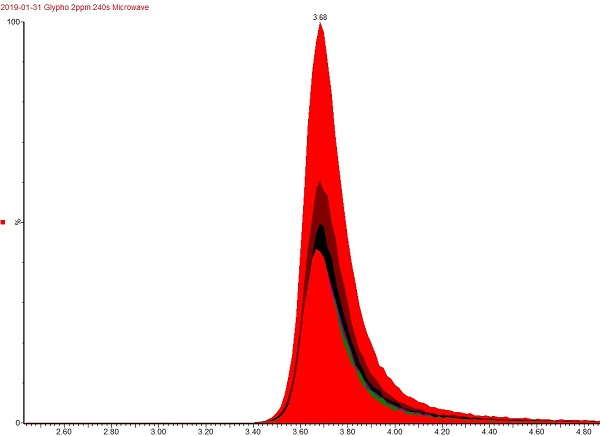
As the video reveals, the longer the water was microwaved, the higher the glyphosate concentration became!
In this chromatogram, the lower red peak shows the original concentration of glyphosate in the starting water, and the highest red peak shows the resulting concentration of glyphosate, following 4 minutes of microwaving:

It turns out that microwaving glyphosate-contaminated foods or beverages actually increases the concentration of glyphosate.
Consumer-grade microwave appliances do not destroy glyphosate.
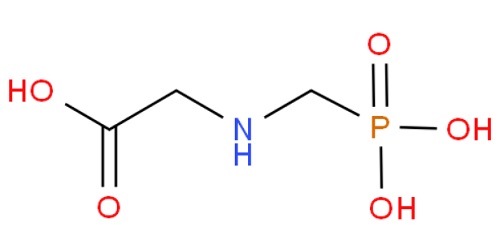
This result is not surprising, knowing the chemistry of glyphosate: (C3H8NO5P)

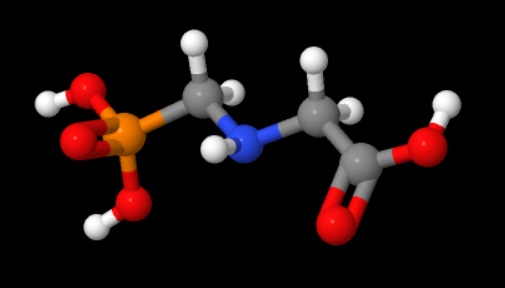
Here’s how glyphosate looks in a 3D model:

Almost nobody is testing their products for glyphosate contamination

Despite the extreme toxicity of glyphosate, almost nobody is testing their products for glyphosate contamination. The Health Ranger Store is expanding glyphosate testing to all in-house products and already displays “Glyphosate Testing” certifications on dozens of health products, including organic turmeric extract, non-GMO vitamin C, clean chlorella superfood, colloidal silver mouthwash and much more.
To support our ongoing mission to conduct important science experiments for the public good, consider purchasing superfoods, nutritional supplements, storable foods and green living products at the Health Ranger Store, where routine tests include heavy metals (ICP-MS), microbiology (e.coli, salmonella, etc.), glyphosate (LC-MS-MS) and an increasing number of pesticide and herbicides. We are using the world’s best science to bring you the world’s cleanest foods and supplements. Our slogan, in fact, is, “Healing the world through clean food.”
Amazon.com and Whole Foods do not conduct glyphosate testing on the products they sell. That’s why Whole Foods products routinely carry glyphosate, a simple, irrefutable fact we are already confirming in our lab.

How you can help spread the truth about glyphosate

Natural News, CWC Labs and the Health Ranger are carrying out 15 more experiments on glyphosate, publishing all results for free to the public. You can help spread the word about these incredibly important findings that help protect public health by:
  • Sharing this article
  • Sharing the video at Brighteon.com (https://www.brighteon.com/5999307007001)
  • Linking to Glyphosate.news
  • Avoiding conventional food products and purchasing organic, non-GMO foods
  • Posting links to our videos and articles in your own blogs, videos or articles
We thank you for your support! There’s a whole lot more fascinating science yet to come… (you’ll be surprised what we’re testing next…)

Where to learn more about glyphosate science

Get frequent news updates on glyphosate at Glyphosate.news.
Read about organophosphates and other toxic pesticides at Pesticides.news.
View all Natural News channel videos at this link on Brighteon.com.
Hear Health Ranger podcasts on science, culture, economics and philosophy at HealthRangerReport.com. (Warning: Politically incorrect content that may trigger weak-minded snowflakes.)
Stay up-to-date on Health Ranger science experiments and published results at HealthRangerScience.com.
Visit the CWC Labs website at CWClabs.com.
If you’re interested in the results of the glyphosate water filter lab tests, you can watch that video here:
Brighteon.com/6001296356001

This this article is reproduced from Natural News

https://www.naturalnews.com/2019-02-14-microwave-glyphosate-health-ranger-releases-lab-test-results.html
 witten by MIKE ADAMS 


Friday, February 08, 2019

Odour Control System Market Is Anticipated to Grow 6 % During 2019–2029


The global standard EN 13725 states that adequate measures need to be taken to minimize the nuisance caused by foul odours. To reduce unwanted variability, air quality is determined by dynamic olfactometry and the procedure should be performed biannually. The measurement is usually compared with the standard data and such regulations have been passed not only in developed economies but also in developing ones. Future Market has studied the odour control system market for a period of ten years. The odour control system market is anticipated to grow with a robust growth of 6 % for the decade.

System Type – Chemical Odour Control to Lose Share to Biological and Physical Odour Control

The chemical odour control segment had the largest share in the odour control system market in 2018 but is on track to lose its leadership position to the physical odour control segment in 2017. However, the growth of the physical odour control segment pales in comparison to the biological odour control segment with the latter predicted to gain a massive 280 BPS by the end of the forecast period. The biological odour control segment may well witness the highest value of 6.4% from 2017 to 2027.


Application – Noxious Fumes from Chemical and Petrochemical Segment Require Odour Control Systems


The chemical and petrochemical segment have a market share of over a third in the odour control system market by application segment at the end of 2018 and is likely to remain so for the foreseeable future. The chemical and petrochemical segment is expected to be worth more than half a billion dollars by the end of the decadal study – considerably larger than other segments. Chemical reactions produce odorous compounds such as H2S and NH4 that need to be treated to comply with environmental regulations and avoid corrosion.

Anotec  has the maximum share in the odour control system market and could gain extra at the expense of all other regions barring Japan in the odour control system market. Booming industrial and infrastructural growth in China and India in particular has been significant in the past few years and should sustain for some time to come. Additionally, stringent environmental regulations might be passed in order to control the scourge of air pollution in these nations.

Competition Dashboard in Odour Control System Market

anotec


Takeaways

The deployment of odour control systems is largely dependent on factors such as growth in the customer base and regulations that mandate the installation of these systems. The chemical and petrochemical industry segment is the one to look out for as expansion projects and renovations of existing systems is poised to influence market growth. Furthermore, environmental degradation has led to the use of effective waste treatment and recycling strategies. Countries are spending substantial sums on installing and rehabilitating existing systems and companies are also expanding their global presence in the odour control system market.


UNDERSTANDS HEAT TRANSFER

Image result for funny engineer memes

Wednesday, February 06, 2019

Single men are smellier (but women find them more manly)


Image result for women sniffing men


If you’ve ever noticed a slight whiff about a single man you know, it may not be that they’re neglecting their bodily hygiene. New research found that single men tend to have stronger body odour – and it maybe linked to higher testosterone level.

Image result for armpit Image result for sexy man workoutImage result for women sniffing men


 Scientists asked 82 intrepid women to sniff the armpit of men’s T-shirts after they exercised, and they found that single men had a stronger odour. 

 The women, aged 18-35, rated the odour and faces of six men also aged 18-35. 

But women also rated the single men’s faces as ‘more masculine’, hinting that the odour may be related to testosterone. 

 The researchers write, ‘Consistent with the hypothesis, single men’s BO smelled stronger than partnered men’s BO and single men’s faces were rated as more masculine than partnered men’s faces. The researchers suggest that the odour may be related to the ‘possible advantages of females being able to identify single males’.

Man makes thousands selling candles that smell like farts and body odour

Farts, vomit, body odour and wet dog might not be everyone’s idea of a nice smell. But there are people who love the scents as this business owner shows. California-born banker, Jeffrey Bennett, 57, started the Stinky Candle Company after noticing his family’s adoration for scented candles and realising there was a gap in the market for those which offer the fragrances of real life. Pic by Caters News - (Pictured: Alex Bennett ) - This business owner makes tens of thousands of pounds creating the worlds WORST candle scents. California-born banker, Jeffrey Bennett, 57, started the Stinky Candle Company after noticing his familys adoration for scented candles and realising there was a gap in the market for those which offer the fragrances of real life. In 2013, he started experimenting with producing the product, and a year later, in 2014, his smelly business became an operational company, now based in Chicago.vSix years on, his part-time company now turns over tens of thousands of pounds despite offering candles which smell like flatulence, vomit and even body odour. SEE CATERS COPY.

In 2013, he started experimenting with producing the product, and a year later, in 2014, his stinky candle business became an operational company, now based in Chicago. Six years on, his part-time company turns over tens of thousands of dollars despite offering candles which smell like flatulence, vomit and even body odour. Other bizarre flavours include nacho cheese, gasoline, chlorine, money, wet dog, beer, skunk, onion, and rotten flesh.

Dad-of-two Jeffrey said: ‘Most of our smells are true to life, and authentic. ‘I can’t say in public what the worst smell request has been, but there are quite a few we have soundly rejected, as they’re too disgusting to consider. ‘Flatulence and vomit, scents we actually have created, are both up there. ‘Some customers have asked us to mix our worst smells, like body odour and flatulence. ‘The smell sticks to everything, which isn’t terrible if you are making baby powder, bubble gum or timber – but a real problem if I try to walk in the house after making body odour, flatulence or vomit.’ Jeffrey, who started the company with business partner Ben Rakozy, 39, and son, Alex Bennett, 29, said creating the candles starts with melting soy, paraffin or beeswax before adding coloured dye.
Once the wax is melted, the fragrance is mixed in at different temperatures depending, on which one is being used. The fragrances are made by several third party perfume houses, however, Jeffery and his partners often experiment with different smells themselves to create some of their most bizarre mashups. Jeffrey said: ‘It seems simple and it is fairly straightforward on paper, but the process has some difficulties when put in practice. ‘We do mix and create our own as well, but they are always based on sanctioned and tested fragrances. 

Pic by Caters News - (Pictured: The workshop of Stinky Candle) - This business owner makes tens of thousands of pounds creating the worlds WORST candle scents. California-born banker, Jeffrey Bennett, 57, started the Stinky Candle Company after noticing his familys adoration for scented candles and realising there was a gap in the market for those which offer the fragrances of real life. In 2013, he started experimenting with producing the product, and a year later, in 2014, his smelly business became an operational company, now based in Chicago.vSix years on, his part-time company now turns over tens of thousands of pounds despite offering candles which smell like flatulence, vomit and even body odour. SEE CATERS COPY.
‘I am not a chemist and don’t desire to play one. ‘My wife made a rule that all clothes come off in the mud room, and I run upstairs and put them in the washer, and have a shower. ‘We have favourite moments all the time, customer satisfaction and appreciation is always a highlight. ‘When someone tells us the gift was perfect for their friend or family member, it’s exciting. ‘After taking a major step in 2017, we have transitioned from a small garage based operation, to an established player in the candle making market that continues to grow and innovate.’


Tuesday, February 05, 2019

Ministry satisfied with changes to address issues that contributed to odour in Unity

The Saskatchewan government said Monday it’s satisfied with changes at Tervita’s waste processing facility near Unity, Sask., as a follow-up to the release of a strong odour from a disposal line on Jan. 2, 2018.

It was a mysterious odour townspeople in Unity claimed made them sick.


“It gave me a migraine and nausea and burning eyes and throat,” one local wrote on the community’s Facebook page.

Air samples collected on Jan. 2 and 3, 2018, revealed a mixture of gaseous petroleum hydrocarbons and sulfur-based compounds.

According to the ministry, these concentrations could have resulted in the short-term effects reported; however, no serious or long-term health effects are expected.

The Saskatchewan Ministry of Energy and Resources completed an investigation and said on July 19, 2018, the source was likely a gaseous component in the liquid waste stream that was received by the facility.

The ministry’s investigation determined the shipment delivered on Jan. 2, 2018, contained caustic waste that was not approved for disposal at the facility. Information indicated it was classified a “Transportation of Dangerous Goods Class 8 corrosive liquid.”


As a result of the investigation, Tervita had to contract a third-party engineering assessment of its waste processing and disposal system and make sure sampling procedures met operating standards. The final report was submitted on Dec. 19, 2018.

The assessment, conducted by Atlas BA Consulting Inc., concluded that disposal caverns and well infrastructure was not compromised by the receipt of the unauthorized materials.

New equipment has been installed at the site to better monitor operating pressures for pumps handling wastes.

The recent assessment confirmed the design of Unity facility together with its operating practices are not compatible with the receipt and disposal of “Class 8 TDG” wastes. The steps taken by Tervita to prevent these wastes from being disposed of at the facility are acceptable to the ministry.

Government officials said Tervita’s current emergency procedures, including changes implemented since Jan. 2, 2018, meet regulatory requirements and industry standards.

The ministry said it’s satisfied that no additional measures are required at this time in relation to Tervita’s approach to both reporting and responding to incidents at the facility.

Unity is roughly approximately 175 kilometres west of Saskatoon.

Artisan bakery plan thrown out due to 'insufficient information' about 'odour impact'

A council has thrown out plans for an artisan bakery - due to a lack of information about 'odour impact'.

Josephine Binns lodged an application to convert the existing commercial premises on 12 Welles Street, in Sandbach, into a 'small artisan bakery serving baked goods and hot and cold drinks to be consumed on the premises'.

In the application form Ms Binns added the bakery would be open from 8am until 6pm most days - occasionally extended to 8pm.

The form added there would be no noise or odour impact, with waste removed by a private contractor.

It added:  "There is no undesirable impact on the sustainability of the shopping area, indeed the change of use will enhance the attractiveness of the area and create a community space for local residents to meet and enjoy their overall shopping experience in the town centre."